On Diablo II, the Horadric Cube, and the strange things we carry with us from old games.
Whenever I returned to Diablo II, there was something I found myself looking forward to almost immediately: getting the Horadric Cube.
It’s a little ridiculous when I think about it. I knew where to find it, I knew what it did, and I’d used it countless times before. There shouldn’t have been anything particularly exciting about getting it again. Yet there I was, making my way through Act II, waiting for that familiar little box to finally take its place in my inventory.
And once I had it, everything somehow felt a little more complete.
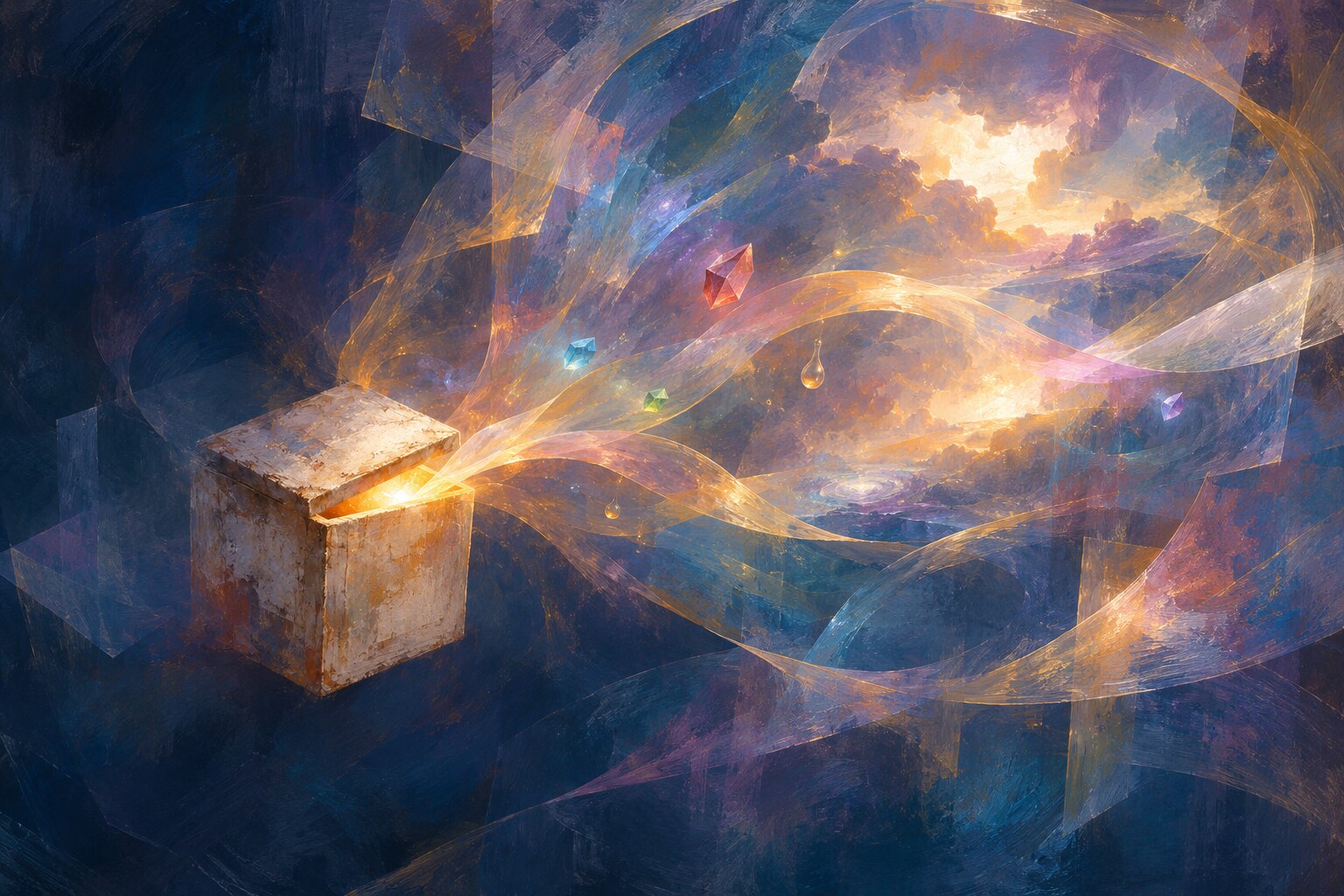
The Horadric Cube is a peculiar piece of game design. It’s essentially an inventory within your inventory, occupying four squares while giving you twelve more inside. You can combine items, discover recipes, and occasionally waste perfectly good things trying combinations that don’t work.
Back when Diablo II was released, that was genuinely fascinating. Game mechanics still had an air of mystery about them. You didn’t necessarily know what was possible, and finding an object like the Cube made you wonder what else the developers might have hidden away.
Today, we’d probably recognize it as a crafting system, look up the useful recipes, and get on with our lives.
The funny thing is, I never really explored its more advanced mechanics anyway. I mostly used it for combining gems and potions. Runes and high-end crafting weren’t something I particularly cared about. There was an entire layer of functionality I barely touched, despite spending an enormous amount of time with the game.
And yet, of all the things I remember looking forward to when replaying Diablo II, it’s that little box.
It’s almost a companion cube, if you’ll excuse the reference. Something you carry around, open, fill with things, and eventually develop your own habits around. It becomes part of how you play, rather than just another feature you occasionally use.
I never needed a better crafting system. I just wanted my Cube back.
That’s a surprising amount of affection for four inventory squares.
A game you once lived in
My relationship with Diablo actually started with the first game, which my grandmother gave me. She was more interested in Age of Empires II and didn’t want to part with that one. Fair enough, really.
Diablo II came a little later. I first saw it at a friend’s house before eventually buying it myself. Back then, that was how I discovered a lot of games. You’d sit at someone’s computer, watch over their shoulder while they played, and gradually become convinced that you needed whatever they were playing too.
Over the years, I played through Diablo II multiple times, sometimes alone and sometimes with different friends. This was still the age of CRT monitors and mice with actual balls inside them, which probably tells you something about how long ago we’re talking.
What surprises me today is how much of that game has stayed with me.
I can still hear the opening music, the little red demons in the “Höhle des Bösen” (the Den of Evil), and their screams when they die. The sound of arrows, the crypts, Blood Raven, and that semi-transparent minimap stretched across the entire screen while you tried to figure out where you were going.
But some of the strongest memories are even smaller.
Opening a chest, watching an item flip through the air with that distinctive little whoosh before hitting the ground. The familiar sounds of moving equipment around or dropping something into the Cube. The ridiculous amount of gold spilling out after killing the Countess.
Even fragments of dialogue are still there somewhere in my head. “Und so geschah es, dass die Gräfin, die einst …”
I couldn’t tell you what I was doing on any particular afternoon, but apparently my brain decided that the sound of an item falling out of a chest was worth keeping for more than twenty years.
I can’t really argue with that decision.
And then there’s Act II.
Lut Gholein, the desert, those horrible tunnels full of worm creatures, the palace, and the strange places the story eventually takes you. The environments felt distinct, and the procedural level generation made exploration genuinely interesting. You couldn’t always guess where you needed to go, and sometimes finding the next passage felt like an achievement in itself.
The music of Lut Gholein is probably what stayed with me most. I only need to think about the town, and I can practically hear it again. It’s difficult to explain what that does to me. It isn’t tied to one particular achievement or some extraordinary moment. It brings back the atmosphere of the place and the feeling of spending time in that world.
Diablo II wasn’t constantly demanding your attention with its story, either. There was a story, and a rather good one, but much of it happened in the background while you explored, fought monsters, and collected loot.
And then one of those incredible cinematics would play.
They carried an enormous amount of weight. Suddenly, everything felt much bigger and more consequential than what you’d been doing for the last few hours. The game didn’t need endless dialogue or elaborate sequences to establish that feeling. A few minutes were enough, and then it left you alone again.
Somehow, all of this stuck. The sounds, the music, the atmosphere, the little routines that weren’t particularly remarkable at the time.
I wasn’t thinking about making memories back then.
I was just playing a game.
When the feeling doesn’t quite return
One thing I remember from returning to Diablo II over the years is how enjoyable the beginning could be.
The familiar environments, the sounds, and the little milestones along the way. Returning to Tristram, hearing its music again, rescuing Deckard Cain, and eventually finding the Horadric Cube. These were things I looked forward to despite knowing exactly what was coming.
Most of my memories are tied to the first two acts, and those were usually the ones I felt most drawn to replay. Act III never appealed to me quite as much. It somehow felt more restrictive and less enjoyable to explore. Act IV felt similarly linear, while Act V always seemed rather short.
I’ve finished Diablo II more than once, but on later playthroughs, finishing it became less important. Often, I was more interested in experiencing the parts I remembered most fondly.
And eventually, the interest could fade.
I find that a little strange. I remember spending enormous amounts of time with this game, being completely absorbed in its world, and finding excitement in things that now seem rather ordinary. Yet returning to essentially the same game didn’t necessarily mean I wanted to spend another hundred hours with it.
Maybe some of that really is the mechanics. I’ve played plenty of action RPGs since Diablo II, and it’s hardly surprising that certain systems no longer feel as interesting as they once did. I already know where the story goes, what the Cube can do, and what kinds of rewards I’m likely to find. There isn’t much left to discover.
And honestly, maybe I’ve just had enough of certain parts of Diablo II. That’s a perfectly reasonable explanation as well.
After all, I can still spend weeks completely absorbed in something like Grim Dawn, only to eventually have enough of it and return to my usual routine. I haven’t lost the ability to enjoy games for long stretches of time, and I don’t think growing older has somehow made that impossible.
But there’s another aspect to returning to an old favorite that I find interesting, and it has less to do with the game itself.
When a game has to live up to itself
When I first played Diablo II, it didn’t have to live up to Diablo II.
It was simply this fascinating game I’d seen at a friend’s house, and I wanted to find out what else was in it. I didn’t know which quests would become memorable, which sounds would stay with me, or how many times I’d eventually play through it.
I wasn’t expecting to feel anything in particular. I was curious, so I played.
And I kept playing.
I think that’s part of why those memories became so meaningful. I didn’t expect the game to justify hundreds of hours before I was willing to give them to it. I gave it those hours because I enjoyed what I was doing, and somewhere along the way, the experience became special to me.
Looking back, there was something almost weightless about those decisions. Spending an entire afternoon trying a different character or chasing some item didn’t feel like a particularly big commitment.
I had an afternoon, and I spent it playing Diablo II. That was the whole plan.
Today, I can still lose myself in games for hours, sometimes weeks, but I bring a lot more experience and expectations with me. I’ve played countless other games, discovered what I enjoy, and become pretty good at recognizing what a game is trying to do.
And when it’s something I already know as well as Diablo II, there’s another complication: I remember how much I loved it.
So naturally, there’s a part of me that hopes to experience that feeling again.
The game now has to compete with the memories I made playing it.
And that’s a rather unfair competition.
What makes this particularly awkward is that actively looking for a feeling can get in the way of experiencing it. The moment I start wondering whether I’m enjoying a game as much as I remember, I’m no longer entirely absorbed in it.
I’ve stopped thinking within the game and started thinking about the game.
It’s almost like breaking the fourth wall yourself.
I’ve had similar experiences with completely new games. Sometimes I’ll start playing something that should be right up my alley, only to find myself wondering whether I actually like it. Instead of trusting that feeling, I’ll keep going, hoping that eventually something will click.
I’ve even caught myself trying to convince myself that I like a game.
It rarely works.
When something genuinely captures me, I don’t spend much time evaluating whether I’m having fun. I just play. I want to see what’s around the next corner, try something different, or simply spend more time in its world.
That kind of immersion hasn’t disappeared from my life. I still find it in games today, sometimes in places I wouldn’t have expected. But it isn’t something I can force, and expecting a familiar game to recreate a particular feeling from twenty years ago probably doesn’t make it any easier.
I don’t know exactly how much of this explains my experience with Diablo II. Perhaps familiarity alone is enough to make parts of it less exciting. Perhaps my tastes have changed. Perhaps nostalgia adds expectations that weren’t there before.
Most likely, all of those things play a part.
What interests me is that I can remember the feeling of being completely absorbed in Diablo II with remarkable clarity, even if returning to the game doesn’t necessarily recreate it.
What the Cube holds
There’s something fascinating about the idea of remastering an old game. You can update the graphics, preserve the mechanics, and reproduce every familiar sound. You might even make the game look closer to how people remember it than how it actually looked.
But I don’t think any of that can guarantee the same experience.
When I think about Diablo II, I’m not just remembering the game. I’m remembering discovering it at a friend’s house, playing it with different people, and spending countless hours exploring without knowing which moments would eventually stay with me.
None of those memories was a feature the developers could have deliberately put into the game. They emerged from what I did with it, from the circumstances in which I played, and from all the ordinary afternoons that gradually became something worth remembering.
I still genuinely love Diablo II. Its atmosphere, its music, and those little details haven’t lost their meaning to me, even if I don’t necessarily want to spend hundreds of hours chasing better equipment anymore.
And I don’t think this is something exclusive to people who grew up with Diablo II. Somewhere, someone is probably spending an absurd amount of time with a game that wouldn’t mean much to me at all. Twenty years from now, they might find themselves looking forward to some ordinary little object or familiar location for reasons they can’t quite explain.
They probably don’t know what they’ll be nostalgic for yet.
Neither did I.
I don’t particularly want to go back to being younger, either. There are plenty of things I enjoy about my life today, including games that can still pull me in for weeks at a time. But I do enjoy remembering what it felt like to become so completely absorbed in something that an entire afternoon could disappear without a second thought.
And sometimes, just thinking about Diablo II brings a little of that feeling back.
I don’t need to start another playthrough for that. The music of Lut Gholein is still there in my memory, along with the sound of opening chests, the familiar voices, and that peculiar little box.
Maybe I’ll play it again someday. Maybe I’ll enjoy the first two acts and carry on, or maybe I’ll lose interest before finishing, as I sometimes did on earlier returns. I don’t really know, and I don’t think it matters much.
The memories are still there, even when the game isn’t running.
The Cube has done its job.